Grooming Your Munchkin: Brushing, Baths and Nail Care
Longhair or shorthair, here is a simple grooming routine that keeps your Munchkin comfortable and mat-free.
Tabby, calico, tortoiseshell, bi-color, colorpoint and solid: what each pattern looks like and what to expect.
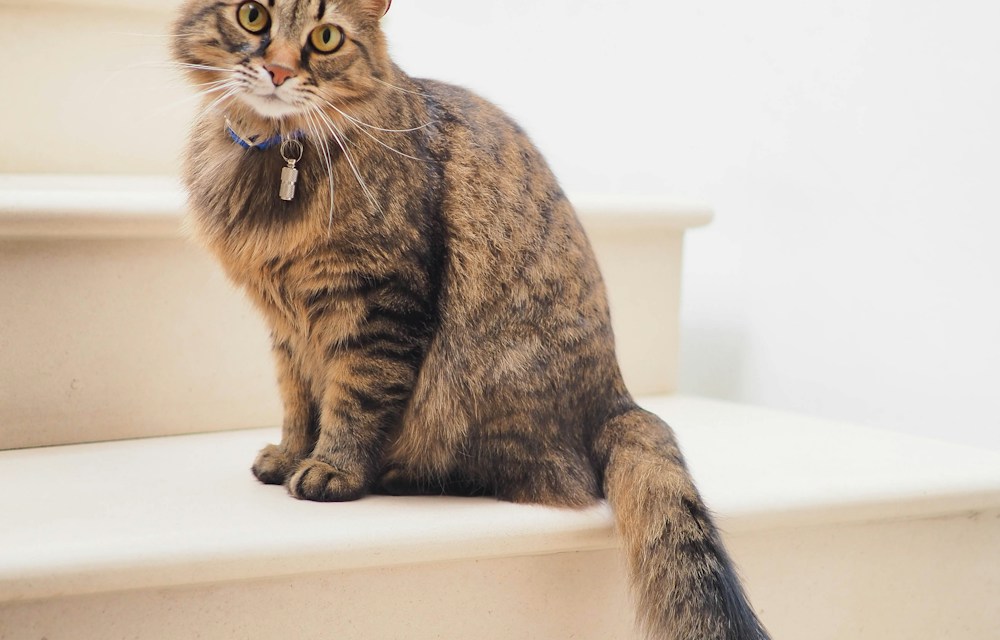
Munchkins come in nearly every color and pattern found in domestic cats. Here is a quick field guide.
One even color: black, white, blue (gray), cream, red, chocolate or lilac. Solid black kittens may show a rusty tint in sunlight while growing.
Stripes, swirls or spots, plus the classic M on the forehead. Tabbies come in brown, silver, red and more.
Patches of white, orange and black. Because the color genes sit on the X chromosome, calicos are almost always female.
A blend of black and orange without much white, often called tortie. Also almost always female.
A solid or tabby color paired with white on the chest, belly, paws or face.
A lighter body with darker ears, face, legs and tail, like a Siamese. Colorpoint kittens are often born pale and darken with age.
Hair that is pale at the root and darker at the tip, creating a shimmering effect when the cat moves.
Coat pattern does not predict temperament, so choose the personality first and the color second. Browse by color on our available kittens page.
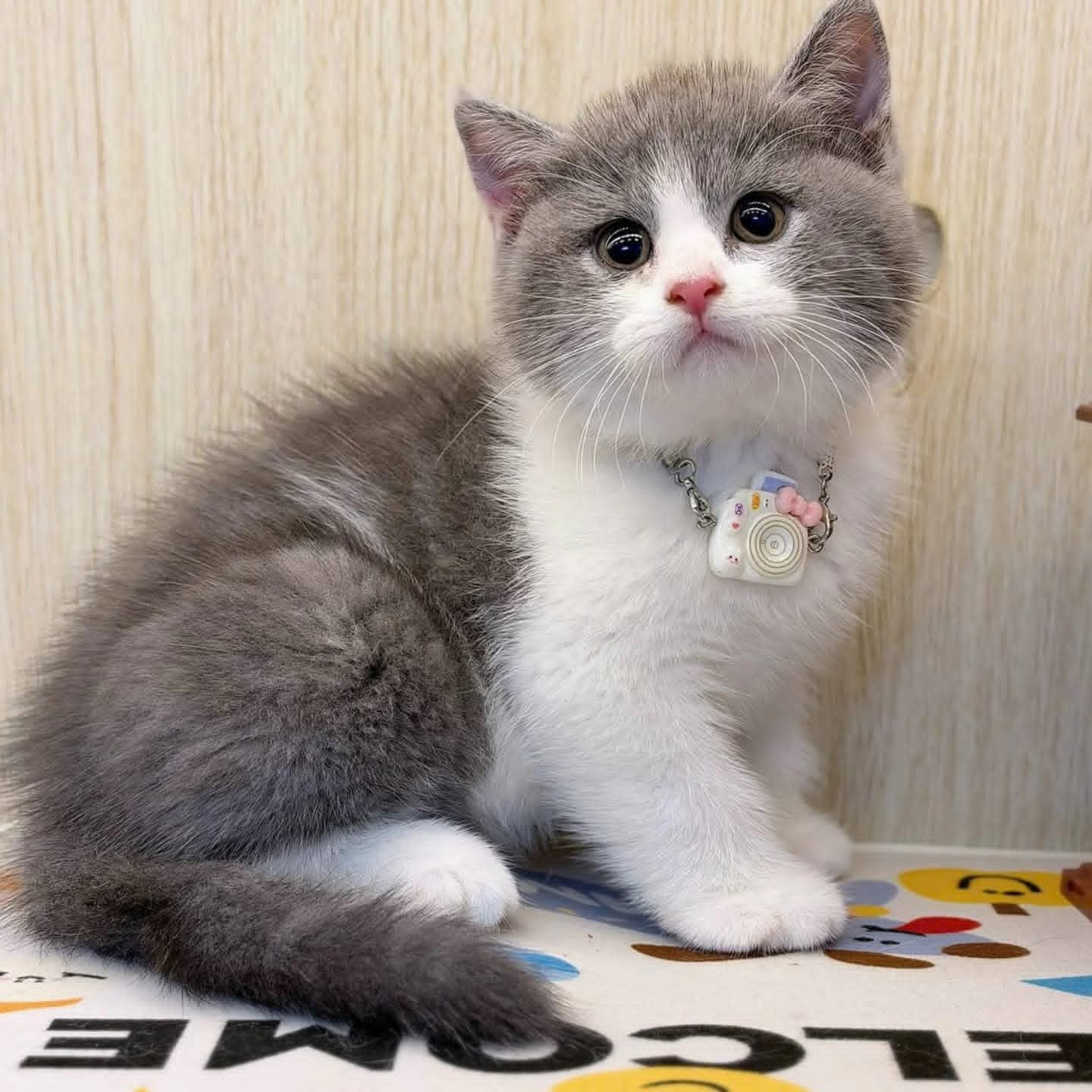 Available
Blue Bi-color shorthair · sex to be confirmed
Gray-and-white markings, with a small collar visible.
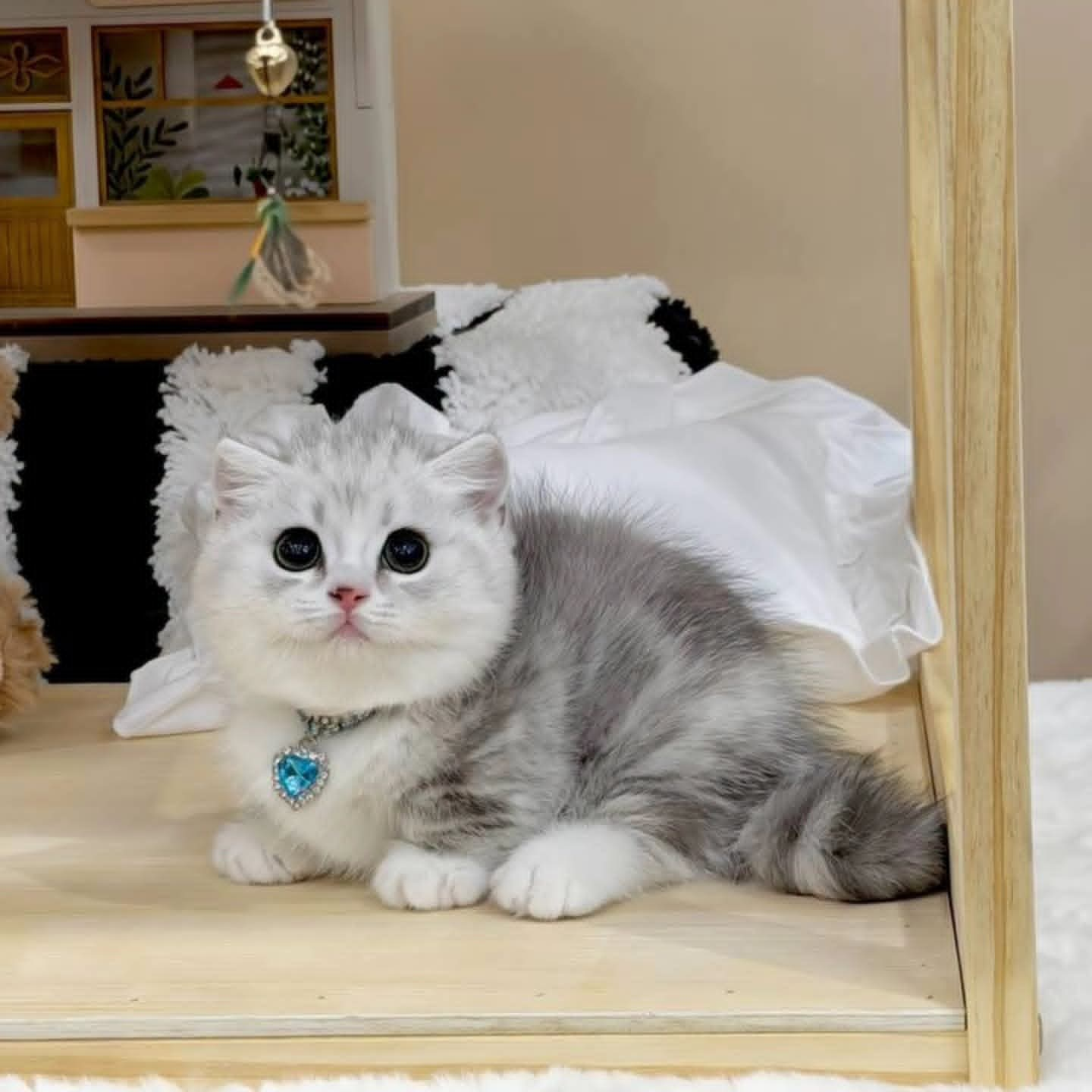 Available
Blue Bi-color longhair · sex to be confirmed
A fluffy gray-and-white coat, photographed in a small nook.
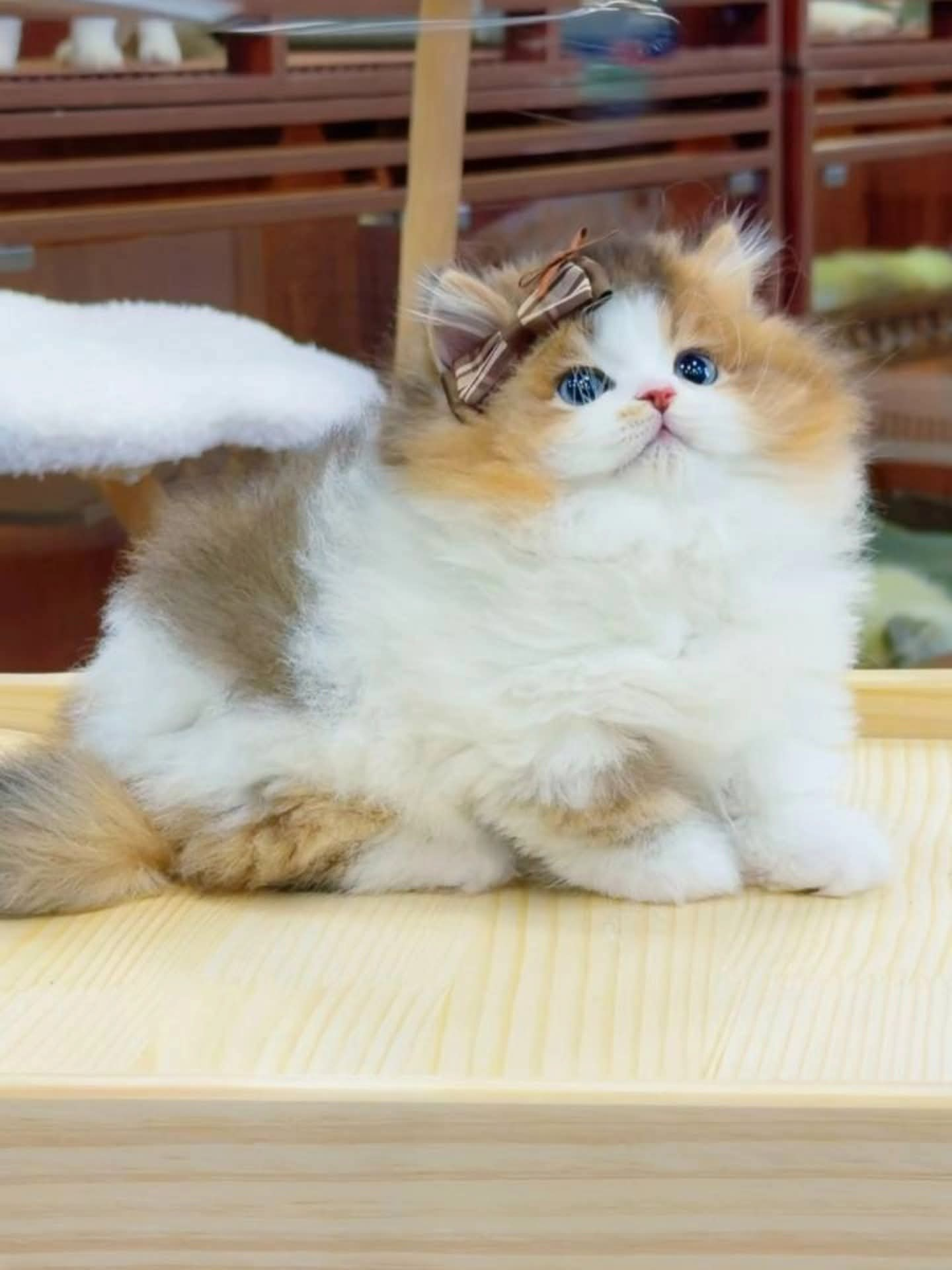 Available
Calico longhair · sex to be confirmed
A long, fluffy coat with cream, gray, and white patches.
Longhair or shorthair, here is a simple grooming routine that keeps your Munchkin comfortable and mat-free.
A day-by-day look at bringing your kitten home, from the first vet visit to building a routine that sticks.
A frank look at the short-leg gene, why registries disagree and the questions that separate responsible breeders from risky ones.